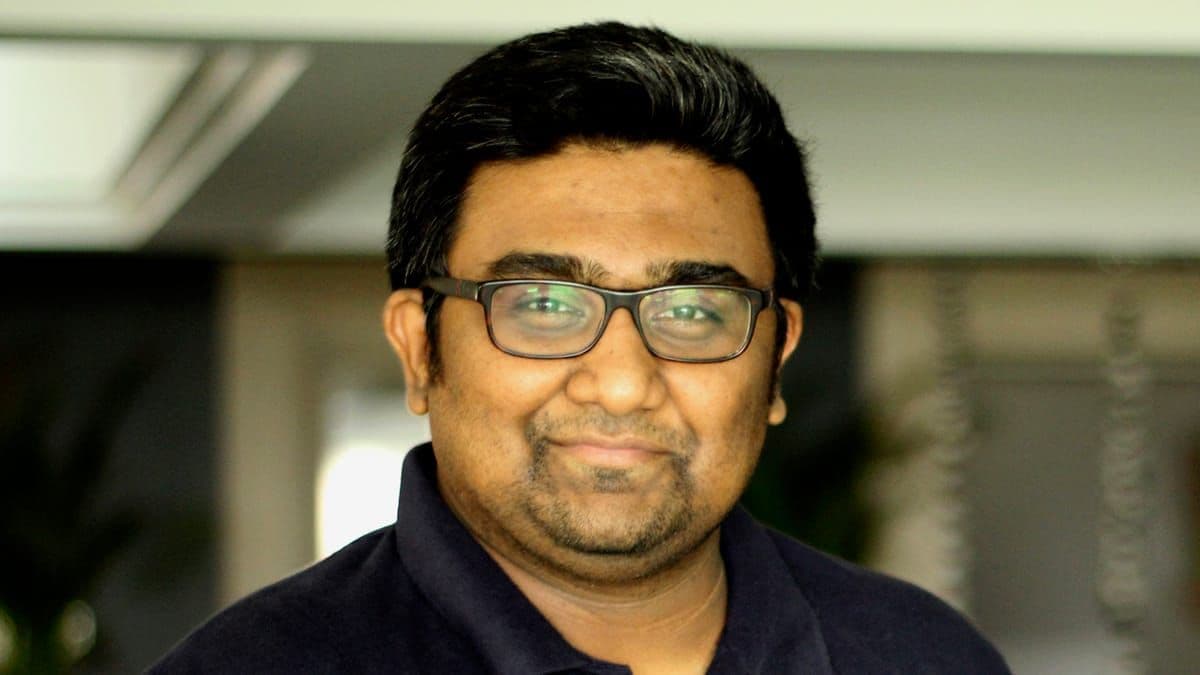
It started as a cold email. Meta's product chief, Chris Cox, wrote to Kunal Shah asking for advice on WhatsApp. It ended with Shah running it — the app that 500 million Indians open every single day. Not bad for a kid who ran a cybercafé out of his Mumbai home at 15.
And here's the part the feel-good headlines skip: Meta didn't just hire a man. It wrote a $900 millioncheque into his company to get him — and what it's really buying isn't Kunal Shah. It's India.
The cybercafé years
Shah was born in Mumbai in 1983 into a Gujarati family; his father ran a small wholesale pharmaceutical business. When Shah was 14, that business struggled and the money pressure landed on the household. So from 15 he worked — data entry, teaching people basic computer skills, running a tiny cybercafé from home.
He studied philosophy at Wilson College, started a part-time MBA at NMIMS, and dropped out in 2004. No IIT, no IIM, no Silicon Valley pedigree — which makes the next two decades more interesting, not less.
FreeCharge — the first ₹2,800 crore
His first idea was a cashback business, PaisaBack, in 2009. It pivoted into FreeCharge, co-founded with Sandeep Tandon in 2010 — a slick way to recharge your phone and pay bills, with a coupon waiting on the other side. It caught India's early-smartphone wave perfectly.
In April 2015, Snapdeal bought FreeCharge in a cash-and-stock deal widely reported at about ₹2,800 crore (roughly $400 million) — one of the biggest Indian internet deals of its time. That exit gave Shah two things every founder needs for act two: money, and a reputation.
CRED — the ₹4,500-crore app that loses money
In 2018 he launched CRED: an invitation-only app that rewards you for paying your credit-card bill on time — but only if your credit score is high enough to get in. It was a status play disguised as a utility, and it worked. CRED became the glossiest brand in Indian fintech.
The valuation, though, has been a rollercoaster: $6.4 billion at its 2022 peak, marked down to $3.5 billion in a 2025 down round, and now $4.5 billionwith Meta's money. And it still bleeds: in FY25, CRED earned ₹2,735 crore in revenue (up 16%) but posted a total loss of about ₹1,457 crore. The bull case is its members — 1.26 crore monthly users, among the most affluent in India, and only about a third of them monetised so far.
$4.5 billion
CRED's post-money valuation after Meta's ~$900 million investment for a ~20% stake — up from a $3.5 billion down round in 2025.
The Meta deal — $900 million and a cold email
Here are the mechanics. Meta is putting in about $900 million through primary and secondary shares, taking a roughly 20% stake and valuing CRED at $4.5 billion. Shah leaves the CEO chair — Miten Sampat, CRED's strategy and finance lead since 2020, takes over as interim CEO — but Shah keeps his personal CRED shares. At WhatsApp, he replaces Will Cathcart, who ran it for nearly seven years.
The trigger really was a cold email from Meta's Chris Cox, asking for Shah's read on WhatsApp. The conversation that followed turned a request for advice into one of the biggest jobs in global tech.
Why WhatsApp? The real prize is your wallet
WhatsApp has 3 billion users worldwide, but India is its beating heart: 500 million-plus users, and already over $1 billion a yearin revenue — more than half of WhatsApp's global earnings — driven by businesses messaging customers. What it hasn't cracked is payments: WhatsApp Pay has barely dented India's UPI market despite years of trying.
So Meta didn't hire a messaging product manager. It hired a man who built a payments company (FreeCharge) and a credit-and-commerce company (CRED) in exactly this market. The signal is loud: Meta wants WhatsApp to become a place you don't just chat, but pay, shop and bank.
Meta didn't buy a fintech. It rented India expertise to fix the one thing — payments — it couldn't crack alone.
His net worth — and the question for the rest of us
Put a number on Kunal Shah and you're guessing, because most of his wealth is private equity. The commonly cited estimate is around $500–600 million— the FreeCharge cash, his retained CRED stake, and 250-plus angel bets — though figures float much higher depending on who's counting. Treat it as a ballpark, not a fact.
Here's where it touches you. Joining Meta's leadership almost certainly means US stock compensation— RSUs — on top of his CRED holding. And that's the same instrument lakhs of ordinary Indians at Google, Amazon and Microsoft already hold. Foreign shares are taxed in a very specific way back home, and most people get it wrong. If you own any, work out the real tax on your RSUs and read how to report them in your ITR — the part of the Kunal Shah story that actually shows up on your return.
What it really means
Strip away the fairytale and two things stand out. First, the wealth here was built on ownership, not salary— FreeCharge equity, CRED equity, angel stakes. That's the quiet lesson under the headline. Second, this is a bet on India's next decade of money: Meta paying $900 million and handing over WhatsApp because the fight ahead isn't about messages — it's about who moves the country's payments. A kid from a Mumbai cybercafé is now standing at the centre of it.
Deal terms, financials and biographical details are as reported by the sources below at the time of writing and may be updated. Net-worth and valuation figures are estimates and can vary. This is general information and commentary, not investment advice.